
Recent Sussex-related publications
Readers of contemporary fiction, well researched as it now is, routinely face the challenge of discovering, or having to assess, how much of the story is based on historical fact and how much is the fruit of the author’s imagination.
Throughout her long career as an author the late Gillian Tindall separated novel writing – Fly Away Home, The Intruder – from history-writing, in which she developed a unique specialism in meticulously researched and spell binding stories of particular places and things, their attachments, their associations and their afterlife. Her celebrated account of Kentish Town in London – The Fields Beneath: The History of One London Village – was followed by fascinating accounts of houses in London, the streets of Paris, village life in France, Bombay and more.
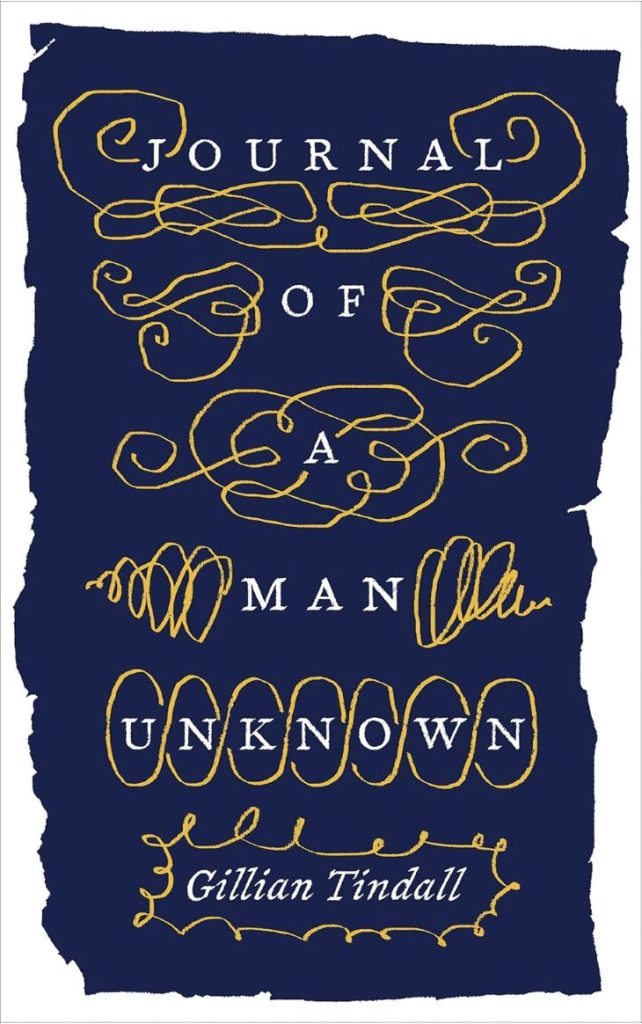
Embedded in the topography, ecology and history of the Ashdown Forest and the Sussex Weald, Tindall’s final work, Journal of a Man Unknown (Spitalfields Life Books) published at the time of her death last year, brings together all her skills. The man in the title is Tom Harthurst, a fictitious member of a possibly actual family, writing his memoirs in the Forest just before he dies in 1709, ‘in the winter of the Great Frost’. In 29 moving entries and some further final passages he traces the 70-odd years of his own life against the background of the iron trade in the Forest, where he was trained, and the political and religious upheavals of the 17th century – regicide, civil war, Commonwealth and the Restoration. His travels take him to London twice (a three-day walk) and to the north of England, where coal was superseding Sussex’s charcoal as the prime source of energy for the trade. In near-picaresque experiences (in London we get close to Tom Jones and Rake’s Progress) he stumbles across some real historical figures, including London intellectuals and the mapmaker Wenceslaus Hollar, the subject of another of Tindall’s studies. At Penshurst Place, for which his uncle had made iron gates, Tom meets a young person of some status.
Tindall knows the territory well, having spent many of her early years in Forest Row. She describes its earlier state in finely drawn detail (Sussex readers will quickly recognise all the place names). The work is a delicate and humane reflection on a number of themes: Tom’s own search for identity, as the son of an absentee Huguenot father; the deforestation of the Forest as it served an industry itself in decline; and the interestingly mitigated impact of momentous national events on the lives of people living far away from the centre of the storm.
So how much of it is true? In a fascinating afterword Tindall does the work for us, carefully separating out the facts from the fiction, and coming out as a direct descendant of one of Tom’s acquaintances, farmer Stephen Tindall, whose restored cottage is now on display in the Weald and Downland Open Air Museum at Singleton.
Words by Derek Wood
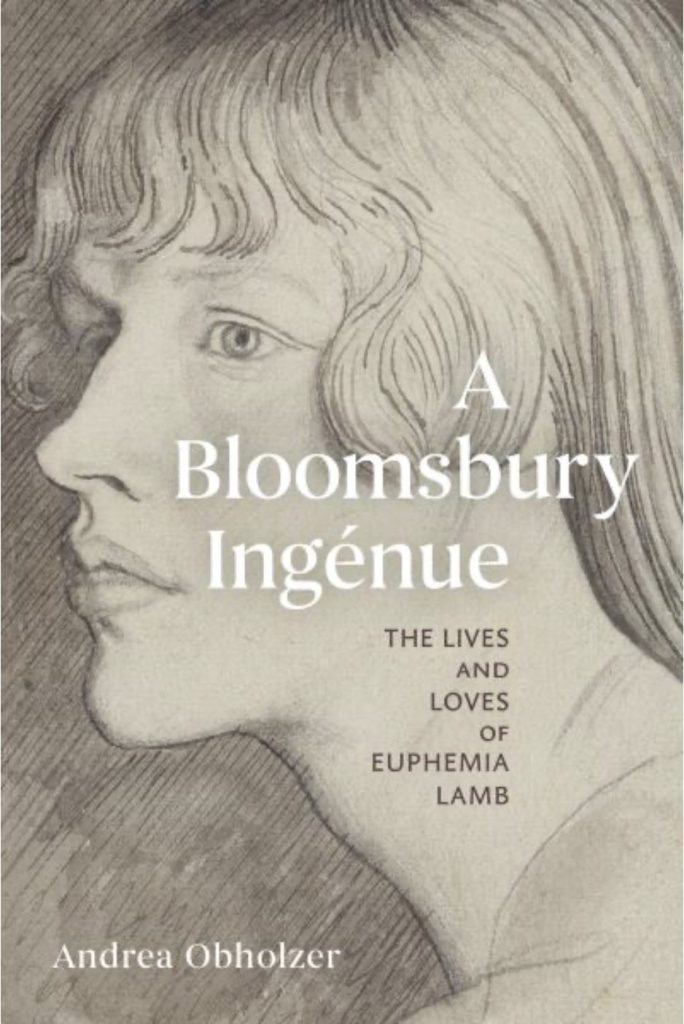
If Euphemia Lamb’s name is unfamiliar, you’ll almost certainly recognise her image. This stunningly beautiful, disarmingly intelligent bohemian sat for a roll-call of early 20th-century artists: her first husband Henry Lamb, Augustus John, Duncan Grant, Vanessa Bell, Franz Hessel, Randolph Schwabe, Jacob Epstein, Ambrose McEvoy and James Dixon Innes all tried to capture her restless glamour.
Andrea Obholzer’s A Bloomsbury Ingenue (Unicorn Publishing) traces Lamb’s journey from a modest Manchester upbringing to a flamboyant life in London and Paris. After separating from Henry Lamb, she moved through artistic and aristocratic circles with startling velocity, collecting and discarding lovers and shocking even the Bloomsburys – who later adopted the very freedoms they once found outrageous. ‘Euphemia,’ commented Maynard Keynes, ‘had more of a sex life than the rest of us put together.’ As well as Grant and John, Prince Sergei of Russia, Henri-Pierre Roché, Aleister Crowley, Victor Neuberg, Nikolai Semenov and Thomas Scott-Ellis all fell under her spell.
Her influence extended beyond the studio. Virginia Woolf’s Florinda in Jacob’s Room was based on her; Crowley wrote poems in her honour; she was the woman at the centre of the ménage à trois immortalised by Roché in Jules et Jim. Lamb produced no art of her own, but Obholzer argues persuasively that she was a true Modernist muse, her legacy refracted through others – an instigator who pushed prominent artists toward new ways of seeing.
If you’re braced for a tragic ending, you’ll be relieved: Euphemia Lamb lived to 70, finishing her days as a farmer in Hampshire, surrounded by an impressive art collection and an improbably large pack of dogs.
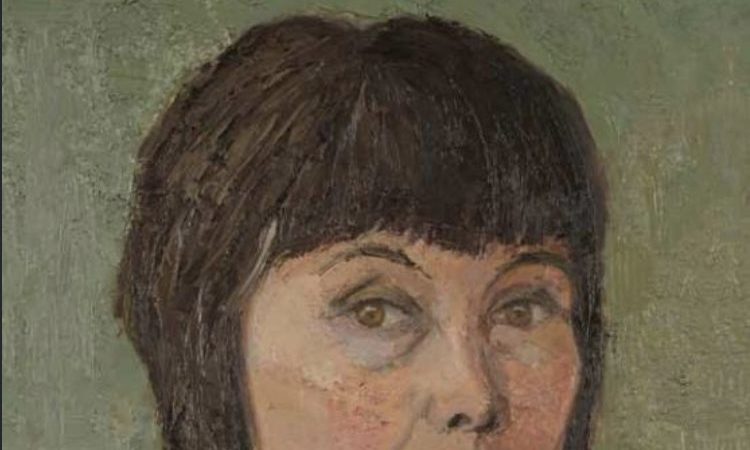
The name Sheila Denning isn’t likely to ring any bells, either. Denning was a portrait, still life and landscape painter educated at Camberwell School of Arts and Crafts under William Coldstream and Victor Pasmore in the late 40s. But she was also the wife of a domineering husband – the potter and sculptor Alan Thornhill – and she neglected her art to assist him with his, and to look after their two daughters, first in Gloucestershire, then in London and finally – by now a single parent – in West Sussex.
One of those daughters is the Hastings based author, painter and retired barrister Teresa Thornhill, who has written a poignant and interestingly structured book dedicated to her mother – Sheila: Portrait of an Unknown Artist (Dornberger Books) – which is part biography, part memoir. Drawing on long conversations with her ailing parents (her mother died in 2015, her father in 2019), a cache of her mother’s letters, and the memories of friends and family members – as well, of course, as her own – she draws a vivid picture of what might have been, as well as what came to pass. This is illustrated with 35 plates, largely featuring examples of Sheila Denning’s fine figurative paintings.
Sheila is a story of a mother’s sacrifice, then, but it’s also a story of a daughter’s coming to terms with her parents’ death, and the lessons they learnt in lives blighted by WW2. The most colourful chapter, titled Spirit Levels and Plumb Lines, describes the artist’s largely unhappy period in the doctrinaire atmosphere of Camberwell, struggling with her teachers’ obsession with tone over line (though Pasmore et al seem to have spent most of their time down the pub).
The third in a trio of publications about largely forgotten 20th-century women is Madge Turner: The Chichester Suffragist (Chichester Women’s History Group), by Nichola Court. This 45 page booklet is about the eponymous daughter of a Chichester-centre grocer who in 1905 became involved in the Women’s Freedom League, campaigning for votes for women. In 1908 she was one of six suffragettes arrested for obstruction during a well-documented march on Downing Street to lobby the Prime Minister, Herbert Asquith; she was subsequently imprisoned at Holloway Prison for 14 days. The booklet, amply illustrated with photographs, newspaper cuttings and images of suffragette paraphernalia, includes a foreword by Kate Mosse. It is part of a fundraising campaign for a statue of Madge Turner, designed by Kate Viner, holding a flag with the motto: ‘Dare to Be Free’, to be erected outside Chichester Cathedral.
Words by Dexter Lee