
Hugh Philpott on how English Romantic music found its voice.
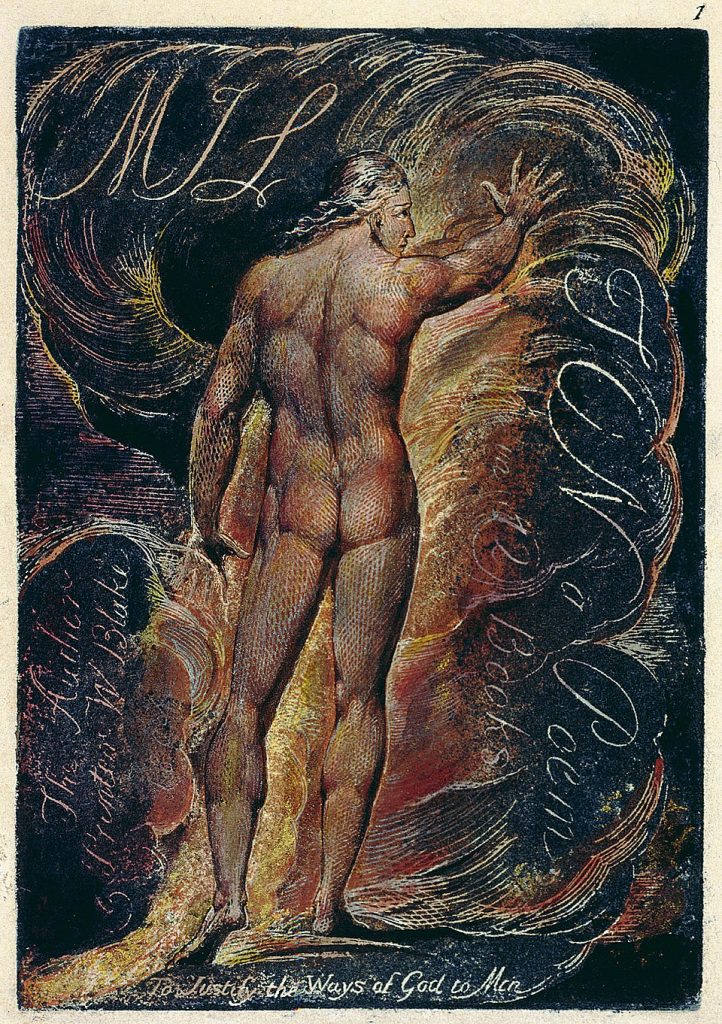
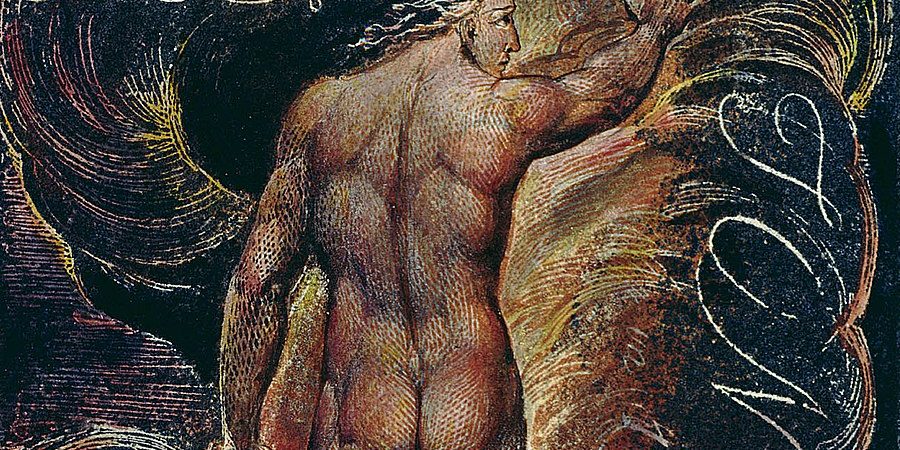
held by the Library of Congress). Here the Vortex is
depicted as swirling clouds or smoke, but elsewhere
in the poem it appears as a comet, star or globe
The nature of Infinity is this:
That every thing has its own Vortex.
These words are from William Blake’s Milton: A Poem. I believe they offer a concise, if rather philosophical, way of thinking about how English Romantic music evolved. Let me explain.
Romanticism in Europe was, in some ways, like one of those peripatetic dinner parties. The British Isles had Blake, Wordsworth and company serving up the starter. We then crossed the Channel for a Teutonic meat course dished up by Goethe, Schiller and Hoffmann, generously seasoned with Hugo’s Gallic sauce. Beethoven, Berlioz, Wagner and others filled our pudding bowls with vast dollops of revolutionary dessert, smothered in emotion, imagination and myth-infused custard. If we still had room, the late Romantic period offered cheese and biscuits from nationalists like Dvořák, Grieg and Sibelius, who pushed Romantic ideals still further. But where were the English? Not wishing to disappoint a cliché, they were still in the pub. Perhaps they were merely enjoying a pre-dinner pint or three and lost track of time. Better late than never, though – especially if you’re bringing the digestif after all that rich continental fare.
There is no delicate way of saying it: British music simply was not very Romantic when our great literary and artistic figures were helping to set the European table. While English poetry and painting declared themselves early and decisively, music lagged behind. Instead, change arrived slowly, through listening rather than proclamation. English composers spent time attending to landscape, folklore and place – not in an overtly nationalist sense, but through a more organic attentiveness to natural environments. Sussex, with its Downs and coastline, proved a perfect setting for this.
We should not, however, view that slowness as absence or failure of imagination. It was more a matter of temperament. English music watched developments elsewhere, absorbed ideas indirectly, and often seemed unsure whether it had permission to speak in the same emotional register. One of the great paradoxes of 19th-century culture is that English Romantic literature fuelled some of the most emotionally charged music of continental Europe long before English composers themselves found a comparable musical voice.
It is worth returning briefly to that starter course, because it was the strong flavour of British Romantic writing that set off a domino effect across Europe. I can already hear the cries of zut alors! and Um Himmels willen! from across the water, but yes, it really did. Goethe and Schiller engaged with Celtic myth and Scottish Romantic history, while European composers seized on English-language texts with enthusiasm and confidence. Byron’s brooding, itinerant hero became the psychological engine of Berlioz’s Harold en Italie, a work that turned English poetic inwardness into orchestral autobiography. Sir Walter Scott proved irresistible to Italian opera, surfacing most famously in Donizetti’s Lucia di Lammermoor and Rossini’s La donna del lago. Shakespeare, too – though earlier than the Romantics – exerted a powerful gravitational pull, feeding German Romantic thought through Goethe and Schiller and later shaping operas, symphonic works and art song across Europe. The cupboard of European Romantic music would look surprisingly bare without our Romantics.
Seen this way, the British Isles exported Romantic imagination long before they thought seriously about musicalising it at home.
That continental appetite for scale had consequences. Orchestras grew larger, louder and more colourful, demanding expanded brass, wind and percussion sections alongside armies of strings. Operas grew in scale, stagings became ever more lavish, often exotic or mythological, designed to overwhelm the senses. Romantic grand opera became total theatre. Composers demanded massed choruses, which were more like crowds than singing ensembles. There were full-scale compulsory ballets occupying large stretches of second acts, and then the increasingly monumental sets which towered over performers. It was epic history and fantasy transformed into public spectacle. Scale and excess were not decorative but expressive, embodying Romanticism’s obsession with power, conflict and emotional extremity. Romantic orchestral music likewise expanded the emotional reach of the symphony and tone poem, which became vehicles for storytelling and psychological exploration, rich in musical portrayals of landscape and nature.
As spectacle and volume increased on the continent, our musical scene remained wary of such grand gestures. It simply was not very British. Musical institutions were conservative, and the Church still dominated serious music. Our great choral traditions preferred collective utterance over individual confession, and there was a deep suspicion of emotional, structural or philosophical excess. Where continental Romanticism sought rapture through rupture, English music leant towards reticence and restraint.
Beyond the German-speaking lands, and beyond France and the Italian states, Romanticism continued to develop in new directions. In Bohemia, Scandinavia and later Finland, composers such as Dvořák, Grieg and Sibelius turned folk material into explicit statements of cultural identity, often underwritten by political urgency. Even the Russians joined in. England, by contrast, felt no such pressure. English composers were beginning to listen more closely to place and landscape, and to follow paths already taken by writers and artists half a century earlier, but there was little of its composers drew on folk song and place without the need to assert nationhood or resistance. As a result, English Romantic music occupies a curious space between inward reflection and inherited tradition. It is shaped by both, but never fully claimed by either.
This in-between position helps explain why English Romantic music sounded the way it did when it finally emerged with confidence. The Romantic values were there, but without the grand gesture. It was ethical rather than heroic, attentive rather than declarative.
Sussex provides a particularly telling vantage point from which to hear this. It is not a landscape that demands conquest or awe. The Downs, the long horizons and the varied and meandering coastline do not overwhelm. Instead they invite return, repetition and dwelling. It is a place that rewards listening rather than revelation, and that quality aligns closely with the way English Romantic music came into being.
Hubert Parry stands at the threshold. Often described as a reviver rather than a revolutionary, Parry’s achievement lay less in stylistic innovation than in restored confidence. His years in the south coincided with a period in which English music began, cautiously, to trust its own voice again. Works such as Blest Pair of Sirens and the later Songs of Farewell are not Romantic in the continental sense. They do not dramatise the self or strain against form. Instead, they articulate a collective, ethical seriousness – a belief that music can speak inwardly without theatrical excess.
If Parry reopened the door, Ralph Vaughan Williams stepped through it and lingered. His relationship with Sussex is well documented: extended stays along the coast, deep engagement with local folk material, and a lifelong attentiveness to landscape as something lived rather than symbolised. His music listens before it speaks. Modal inflections, open textures and long-breathed melodies suggest space and continuity rather than narrative drive. Even when not explicitly tied to Sussex, works such as the Fantasia on a Theme by Thomas Tallis or A Pastoral Symphony embody this stance. Romanticism here is not a claim; it is a way of being present.
Arnold Bax brought a darker, more inward Romanticism to the same terrain. His period at Storrington placed him physically beneath the South Downs, yet emotionally within a more turbulent imaginative world. Bax’s Romantic inheritance was mythic, brooding and psychologically charged. Landscape in his music was no longer merely pastoral; it became symbolic and unstable, a space in which inner and outer worlds blurred. It was with John Ireland that English Romanticism perhaps settled most fully into the Sussex earth. Ireland lived for many years in the county, and his music bears the marks of intimacy rather than observation. This is Romanticism stripped of grand ambition: compact forms, restrained utterance, and a quiet emotional gravity. His landscapes are not scenic backdrops but lived environments, places known through repetition and familiarity. Romantic feeling survives here not as declaration but as presence.
What unites Parry, Vaughan Williams, Bax and Ireland is not style but stance. English Romantic music does not announce itself. It listens – to landscape, to speech rhythms, to inherited forms, to moral hesitation – and only then does it respond. Its intensity is cumulative rather than explosive.
English music can appear subdued or hesitant. Measured on its own terms – as a tradition shaped by place, patience and conscience – it reveals a different kind of power, one that steps aside from continental display rather than competing with it. The Sussex countryside and coastline, with their long horizons and shifting light, offer no single revelation. They reward those willing to stay, to return, to listen again. So too does English Romantic music. It does not demand attention. It settles quietly and insistently into the landscape, waiting for those prepared to hear what has been there all along.
I have curated a playlist which offers a cross-section of the genre, offered as a single journey, shaped by coast and green landscape. Without doubt it is full of rapture and feeling. There is no need for grand declaration here; this music prefers to unfold by colouring atmosphere and mood. It reflects Blake’s sense of Infinity, and I invite you to lose yourself in its vortex.
Listen to the English Romantic Music playlist on Spotify via the QR code.

- Hubert Parry, Blest Pair of Sirens, Choir of St John’s College, Cambridge, Andrew Nethsingha
- Ralph Vaughn Williams, Fantasia on a Theme by Thomas Tallis, Iona Brown, Trevor Connah, Stephen Shingles, Kenneth Heath, Academy of St Martin in the Fields, Sir Neville Marriner
- Hubert Parry, My Soul There is a Country, The Sixteen, Harry Christophers
- Arnold Bax, Summer Music, Bryden Thompson, Ulster Orchestra
- Ralph Vaughn Williams, The Lark Ascending, Nicola Benedetti, London Philharmonic Orchestra, Andrew Litton
- John Ireland, The Forgotten Rite, Sinfonia of London, John Wilson
- Arnold Bax, Tintagel, Royal Scottish National Orchestra, David Lloyd-Jones
- John Ireland, Sea Fever, Roderick Williams, Iain Burnside