
A cross-cultural exchange in London connects Chinese and UK artists through the shared language of embroidery
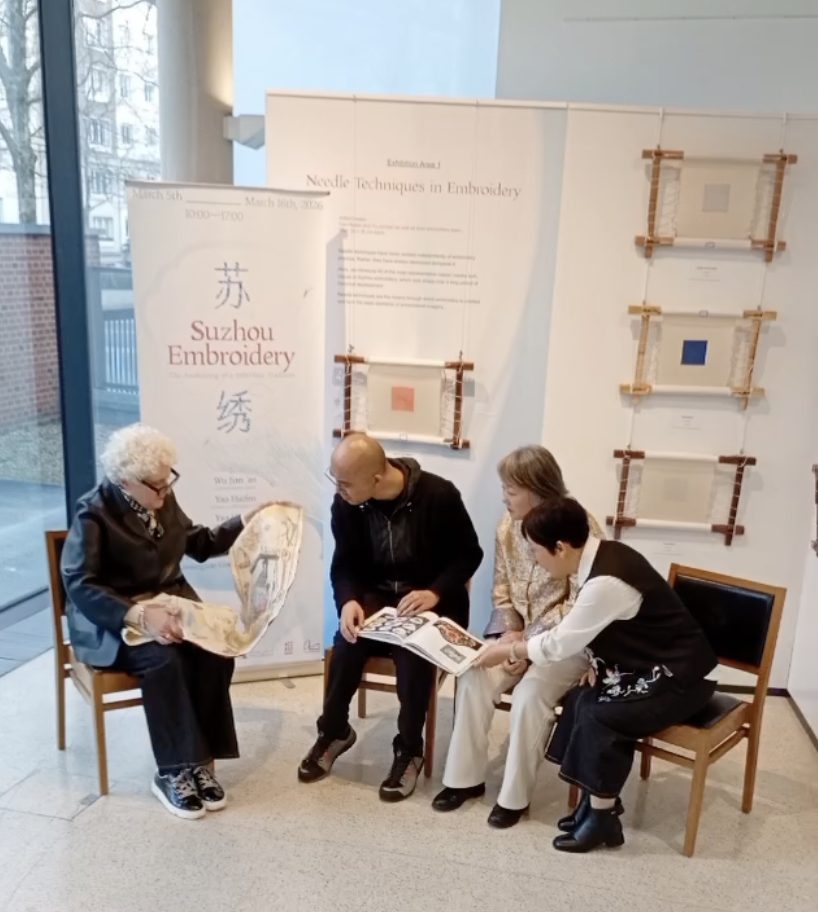
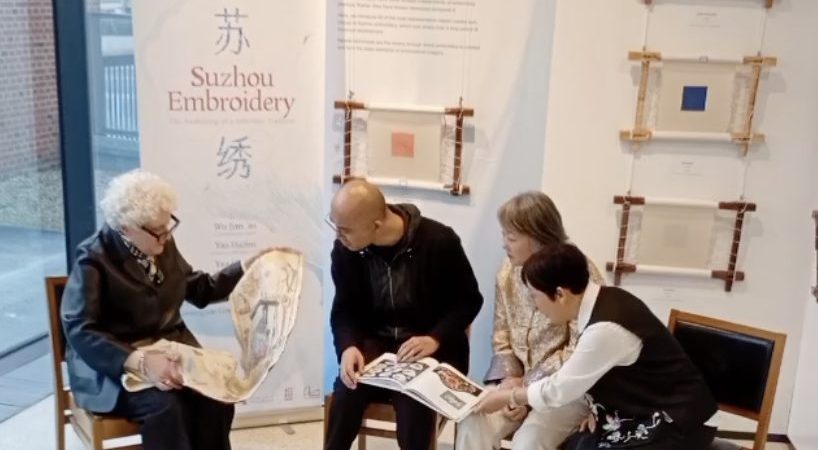
Strong international connections were forged during a cultural exchange between Chinese and UK-based embroidery artists at the Royal Geographical Society (RGS) in March. The event was organised by Gyre Craft and ROSA Magazine alongside the exhibition Suzhou Embroidery: The Awakening of a 1000-Year Tradition.
Held from March 6 to 15 at the RGS gallery in Kensington, the exhibition itself centred on a collaboration between multimedia artist Wu Jian’an and master Suzhou embroiderers, the sisters Yao Huifen and Yao Huijin. Developed over more than a thousand years, Suzhou embroidery is known for its refined and highly intricate stitching techniques. Traditionally, practitioners have been recognised more for technical mastery than individual authorship, often working to reproduce established images rather than creating their own.
This dynamic began to shift when Wu, internationally acclaimed for his monumental papercut and collage works, collaborated with the sisters in the lead-up to the 2017 Venice Biennale. He invited them to move beyond established practice and into a more experimental, contemporary context. To realise his ideas, they developed new stitching techniques and produced seven distinct versions of Skeleton Puppet Play, a work created in the Southern Song Dynasty by artist Li Song (c.1200 CE).
In doing so, they broke with convention by combining multiple techniques within single compositions, creating deliberately contrasting visual languages that expanded the possibilities of the medium. They also produced a series of abstract pieces, combining multiple techniques within a single composition and engaging more directly with intuitive, creative decision-making. The resulting pieces were presented in the Chinese Pavilion at the 57th Biennale, where they received strong critical and public attention.
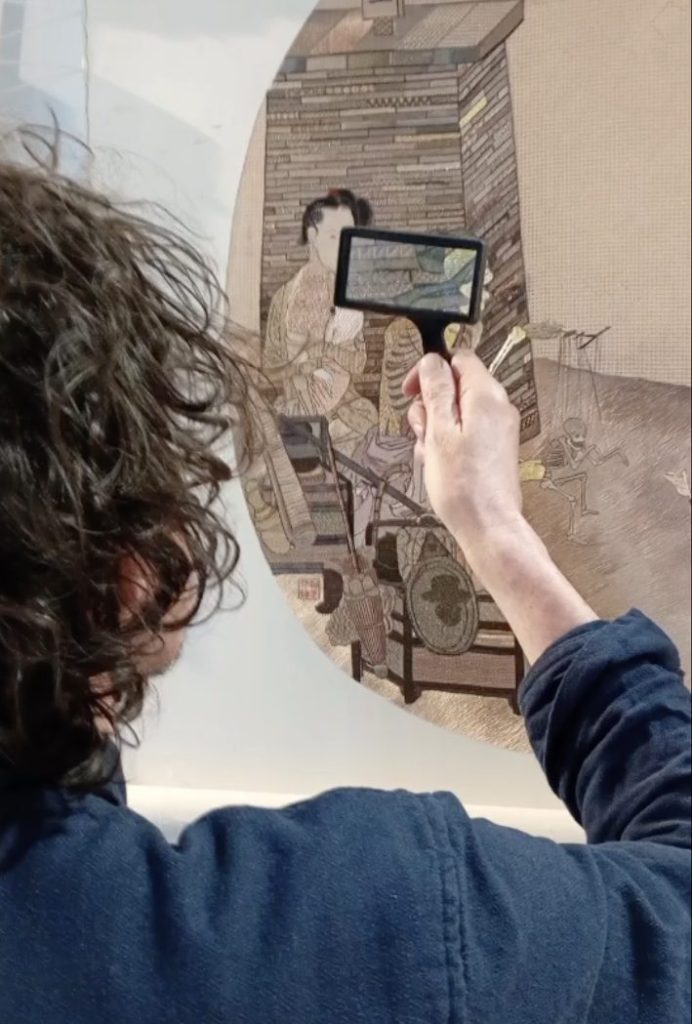
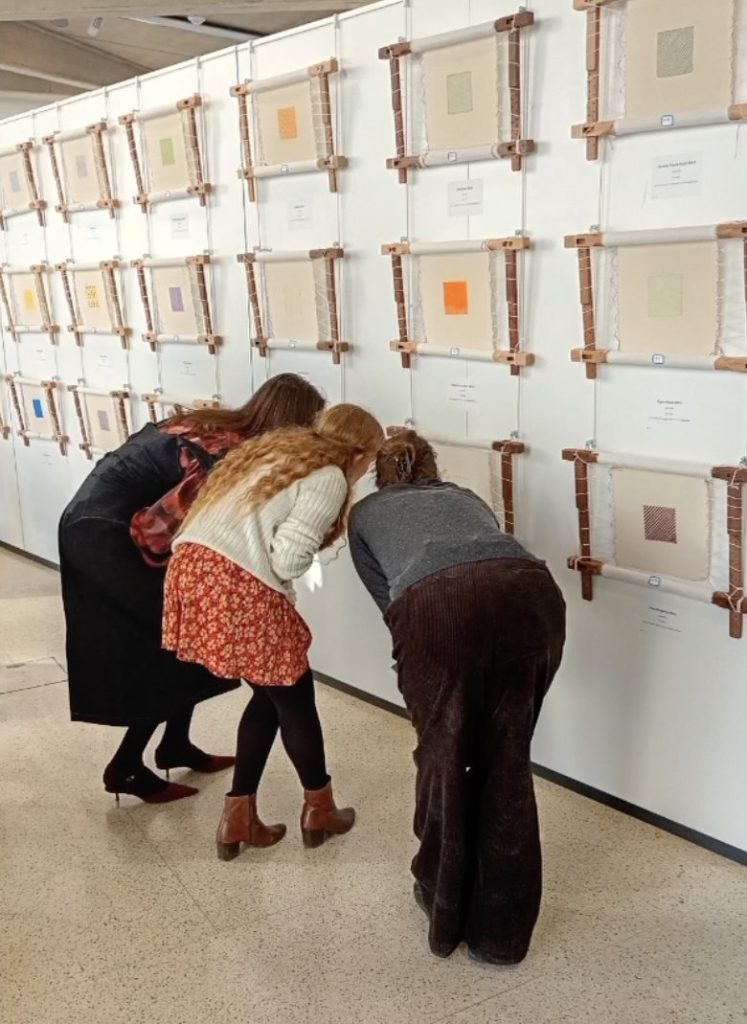
At the 2026 presentation of this exhibition at the RGS, five UK-based artists working with embroidery were invited to respond to the work. The exhibition also included a detailed display of traditional Suzhou stitching techniques, offering important context for visitors less familiar with the practice.
Following a tour of the exhibition, the UK-based artists met with their Chinese counterparts to discuss their approaches. Participants Emily Barnett, Holly Parr, Olga Prinku, Ksenia Semirova and Anne Kelly shared their individual methodologies and artistic perspectives before opening up a wider conversation.
Common themes quickly emerged. Much of the discussion focused on how traditional craft can evolve while remaining relevant, and how deep technical knowledge can be preserved without defaulting to the repetition of familiar motifs for commercial purposes. The often-blurred boundary between craft and fine art was another key point of exchange. Despite working in different cultural contexts, all eight artists noted that they face similar challenges in navigating a rapidly changing global art landscape.
The UK-based artists were invited by ROSA Magazine, a regional arts publication based in Sussex, on the south coast of England. The exchange was chaired by its Editor, Alex Leith, who reflected on the region’s long-standing cultural significance. For centuries, Sussex has attracted major British artists and writers, including JMW Turner, John Constable, Virginia Woolf and Arthur Conan Doyle. It also has a strong tradition of craftmaking, particularly in ceramics, textiles and basketry, is recognised as the hub of the contemporary craft revival, and continues to support a vibrant contemporary arts and craft scene.
Leith also highlighted the many internationally recognised cultural venues in the area, including Glyndebourne Opera House, Charleston Farmhouse – once home to the Bloomsbury Group – and the Royal Pavilion, known for its distinctive chinoiserie interiors. In addition, ROSA organises its own annual events, such as the Botanical Art Fair at West Dean and Sussex Craft Week.
The exchange was supported by simultaneous translation and filmed by Gyre Craft. Conversations continued informally during the private view that followed, where artists shared techniques and ideas in a more relaxed setting. There is a strong sense that this exchange will lead to further international collaborations in the future.