
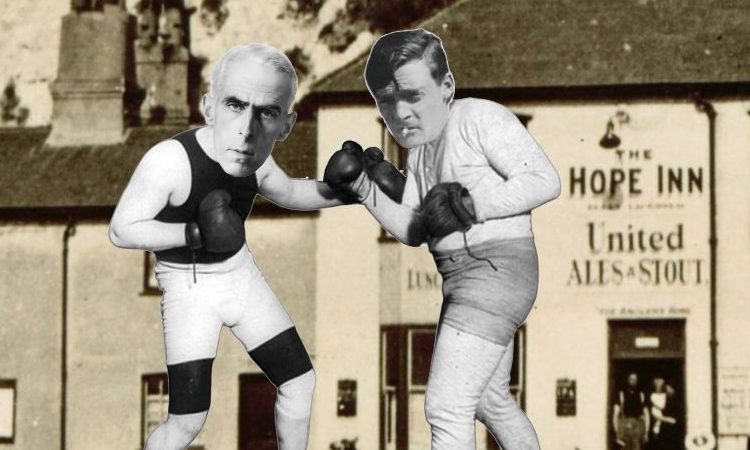
Did Ravilious and Piper have a fistfight in Newhaven?
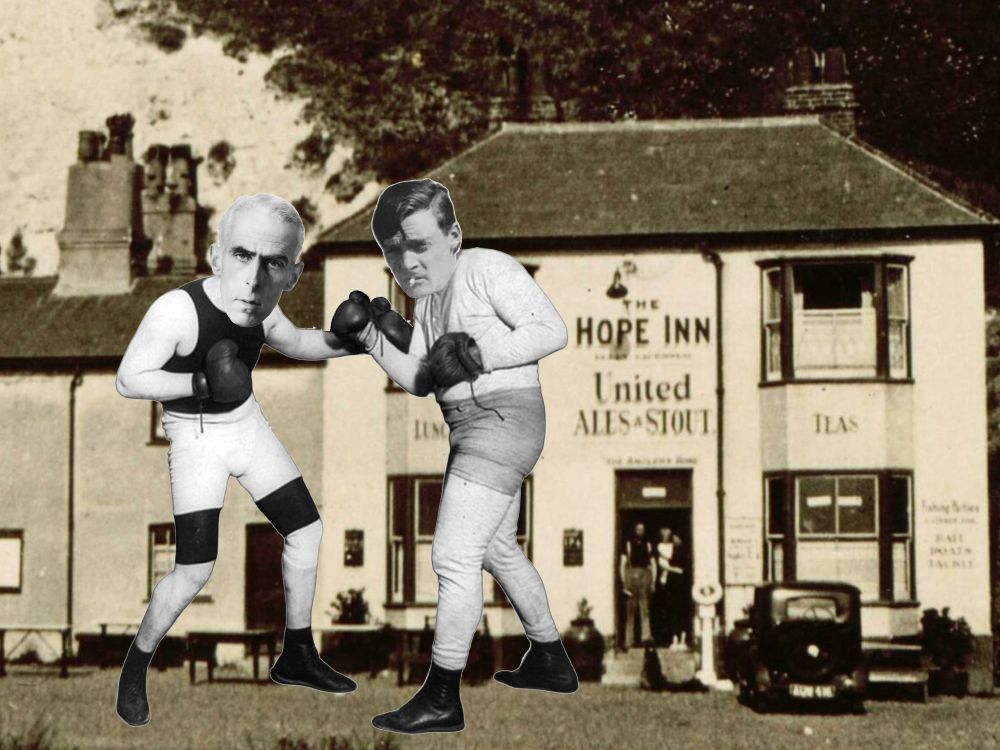
British Modernism is often imagined as restrained: rebellions conducted in tweed jackets; revolutions staged politely over a pint of mild. Which is why one stubborn story continues to fascinate. Sometime in the early 1930s, in the port of Newhaven, two rising figures of British art, John Piper and Eric Ravilious, are said to have come to blows.
Or perhaps they didn’t. Or perhaps they merely shoved. Or argued loudly, a few drinks down. The uncertainty is the point.
The outlines of the story, though, are stable. Piper and Ravilious were members of the Seven and Five Society, a small but volatile group that included Ben Nicholson, Barbara Hepworth, and Edward Bawden. In the early 1930s the group was riven by ideological tension: abstraction versus representation, continental Modernism versus English sensibility. Add youth, ambition, heavy drinking, and conflict was almost guaranteed.
At some point in 1933 or 1934, a group of these artists found themselves in Newhaven, likely at The Hope Inn. Alcohol f lowed. An argument broke out. Piper and Ravilious were at its centre. What followed has been described variously as a ‘quarrel,’ a ‘confrontation,’ a ‘scuffle,’ and, in popular retelling, a ‘fight’.
The clearest printed account appears in Andy Friend’s 2015 biography Eric Ravilious: A Life of Design and Landscape, which refers to ‘at least one drunken confrontation between Ravilious and John Piper, at Newhaven.’ Friend notes that the incident shocked those who knew Ravilious best and was quite out of character. Piper is named. The location is named. Physicality is implied.
Other writers step back. Fiona MacCarthy, in her Ravilious & Co catalogue essay, mentions ‘a drunken quarrel at Newhaven, later much exaggerated,’ acknowledging the incident while warning against legend. Alan Powers, writing more generally about the Seven and Five, refers to tensions that reached ‘the point of physical confrontation’.
Then there is silence. Piper never mentions the incident in his memoir John Piper on His Life in Art. Ravilious left no first-person account, and his early death in 1942 cut off any chance of later clarification.
So why does the story endure? Partly because it punctures a myth. British Modernism is often imagined as polite and emotionally muted. The idea that its key figures might have shouted, shoved, or lost control feels revelatory. It also humanises Ravilious, so often cast as gentle and passive, by suggesting a breaking point. And it complicates Piper, revealing the intensity behind a later, monumental reputation.
The Newhaven incident survives, in effect, because it is useful. It dramatises a tense moment in British art. It reminds us that aesthetic arguments were personal, even physical. And it shows how reputations are curated by critics and biographers. What we’ll never know is… if there was a fight, who came out on top? Our money’s on ‘Boy’ Ravilious.
AG